
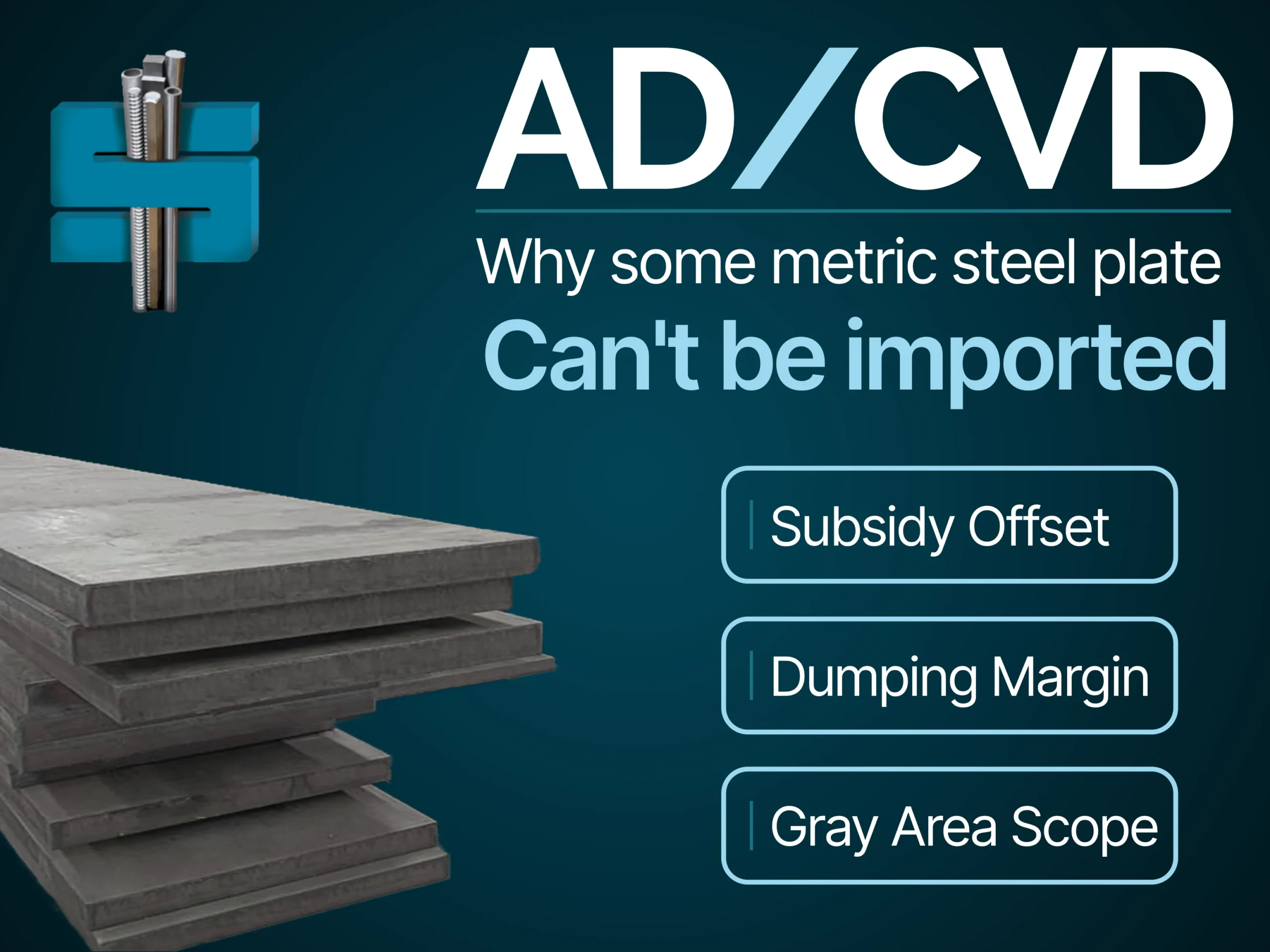
At Spahr Metric, we pride ourselves on providing a wide range of high-quality metric metal products sourced from reliable international suppliers. However, U.S. trade regulations, specifically antidumping duties (AD) and countervailing duties (CVD), sometimes prevent us from importing certain items. These duties are designed to address unfair trade practices and can add significant costs or risks to imports. In this post, we’ll explain what AD and CVD are, how they work, and why they impact availability for products like metric steel plate. Our goal is to help you understand these policies so you can make informed decisions when requesting quotes.
What Are Antidumping and Countervailing Duties?
Antidumping duties (AD) and countervailing duties (CVD) are tariffs imposed by the U.S. government on imported goods to counteract unfair pricing or subsidies that harm domestic industries.
- Antidumping Duties (AD): These apply when foreign producers sell goods in the U.S. at prices below their fair market value—often below the cost of production or the price in their home market. This practice, known as “dumping,” can undercut U.S. manufacturers and distort competition. AD rates are calculated based on the margin of dumping and can range from low single digits to over 100%, depending on the case.
- Countervailing Duties (CVD): These target government subsidies provided to foreign producers, such as grants, tax breaks, or low-interest loans, which give them an unfair advantage. CVD rates offset the value of these subsidies and are applied in addition to any AD.
Both AD and CVD are administered under U.S. trade laws, including the Tariff Act of 1930. They are not general tariffs but targeted remedies based on investigations into specific products from specific countries.
How Do AD/CVD Investigations Work?
The process begins when U.S. industries or workers file petitions with the U.S. Department of Commerce (Commerce) and the U.S. International Trade Commission (ITC).
- Petition and Initiation: Petitioners provide evidence of dumping or subsidies and injury to the domestic industry. If accepted, investigations start—typically lasting about a year.
- Commerce’s Role: Commerce determines if dumping or subsidies exist and calculates duty rates. It issues preliminary and final determinations, which can lead to provisional duty deposits by importers.
- ITC’s Role: The ITC assesses whether the U.S. industry has been materially injured or threatened by the imports. An affirmative finding results in final AD/CVD orders.
- Enforcement: U.S. Customs and Border Protection (CBP) collects the duties at entry. Orders are reviewed annually, and rates can change. As of 2026, there are over 150 active AD/CVD orders on steel products alone, covering items from more than 30 countries.
Scopes of these orders define covered products through detailed descriptions, not just Harmonized Tariff Schedule (HTS) codes. HTS codes are for reference, but the written scope is binding. For example, recent 2025 orders on corrosion-resistant steel products (CORE)—flat-rolled steel coated with zinc, aluminum, or alloys—from countries like Australia, Brazil, Canada, Mexico, and others, have dumping margins from 5.59% to 191.26% and subsidy rates from 1.14% to 257.83%.
Gray Areas and Risks in Importing Metric Metal Products
Determining if a product falls under an AD/CVD order isn’t always straightforward. Scopes use precise language about dimensions, compositions, and processing, but interpretations can vary.
- Example: Metric Steel Plate: Steel plates, including those in metric sizes, may overlap with scopes for flat-rolled steel products or CORE. If a metric plate matches the description (e.g., thickness, width, coating), it could be subject to duties, even if not explicitly listed as “metric.” This creates a gray area: Importers must self-assess, but CBP or Commerce may disagree during audits.
- Penalties for Non-Compliance: If goods are found subject to AD/CVD after import, importers face retroactive duties, interest, and penalties. These can include:
- Civil penalties up to the value of the merchandise for negligence.
- Higher fines for gross negligence or fraud, potentially leading to criminal charges.
- Loss of import privileges or additional scrutiny.
CBP conducts audits and enforces strictly; evasion schemes are illegal. To check coverage, use official tools like Commerce’s ACCESS portal or CBP’s AD/CVD Search. If uncertain, importers can request binding scope rulings from Commerce, but this takes time and doesn’t guarantee favorable outcomes.
Why Spahr Metric Chooses Not to Import Certain Items
At Spahr Metric, compliance is our top priority. While some products might technically be importable, the risks—financial, legal, and reputational—outweigh the benefits in gray areas like metric steel plate. We avoid these items to protect our customers from unexpected costs and ensure smooth transactions. Instead, we focus on compliant alternatives that meet your needs without added duties.
If you’re requesting a quote for an unavailable item, we’ll direct you to substitutes or explain the reasoning. For more details on specific products, consult official U.S. government resources.
Resources for More Information
- U.S. Department of Commerce: Antidumping and Countervailing Duties
- CBP AD/CVD FAQs: Frequently Asked Questions
- ITC AD/CVD Orders List: Available via their trade remedy section.
We appreciate your understanding and are here to help with any questions. Contact us for compliant metric metal solutions.